
 https://orcid.org/0000-0001-5840-943X
-
Novel therapies & next-gen medical devices in cardiovascular & vascular disease management
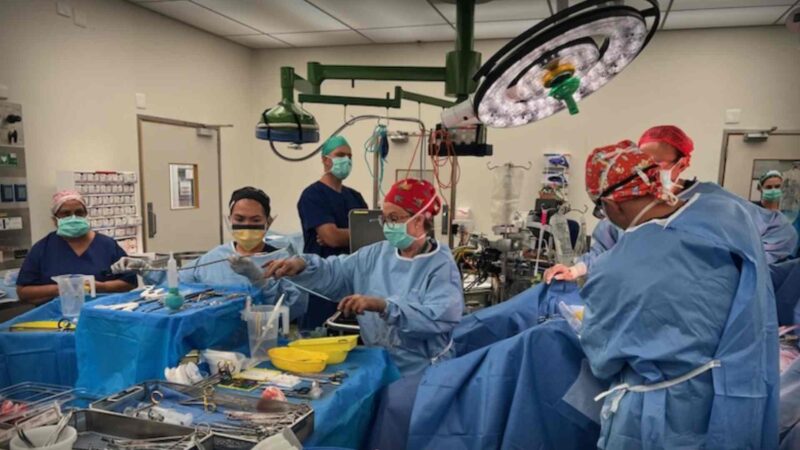
Professor Shirley Jansen AM is a distinguished vascular and endovascular surgeon whose career spans clinical leadership, academic excellence, and pioneering research. She currently holds the Lawrence-Brown Chair of Vascular Surgery at Curtin University’s School of Population Health and serves as Head of the Department of Vascular Surgery at Sir Charles Gairdner Hospital, a role she has held since 2015. In addition, she is the Director of the Heart & Vascular Research Institute at the Harry Perkins Institute for Medical Research. Her early career was marked by prestigious fellowships, including a British Heart Foundation Research Fellowship (1996), and multiple international travelling fellowships from leading surgical societies and industry sponsors between 2001 and 2002.
-
Big data research in maternal, perinatal and renal health epidemiology
Dr Erandi Hewawasam is a Research Fellow at the National Perinatal Epidemiology and Statistics Unit within the Centre for Big Data Research in Health at University of New South Wales (UNSW). Her work focuses on maternal and reproductive health, chronic diseases (e.g., kidney disease, endometriosis), and early-life outcomes. She is the Program Manager for the Fertility Medicine Data Asset for Australia (FM-DATA), an MRFF-funded national infrastructure project linking fertility, hospital, Medicare, pharmaceutical, and perinatal datasets covering more than 40 million individuals. She also coordinates the Early Life Course Platform, integrating around 20 New South Wales and Australian federal administrative datasets to support population health research.
-
Role of metabolic dysfunction in advanced prostate cancer
Dr Gunter was drawn to the area of prostate cancer research and the intersection between chronic metabolic disorders and their emerging relationship to cancer. Her strengths include expertise in the metabolic syndrome, insulin signalling and metabolism, and she has a demonstrated record of successful and productive research projects in metabolic research where she now applies her efforts to understanding the role of metabolic dysfunction in advanced prostate cancer.
Post Views:
553
Identification & characterisation of molecular drivers of therapeutic resistance


Search Researchers / Research
Recent Profiled Researchers
Categories
- Allied Health 1
- Alzheimer's 2
- Antenatal 1
- Antimicrobial Resistance 1
- Artificial Intelligence 3
- Association 1
- Autism 2
- Bacteria 1
- Behavioural Science 1
- Biochemistry 1
- Biomarkers 2
- Biomaterials 2
- Blood Cancer 2
- Bone Health 3
- Bowel Cancer 3
- Brain 18
- Brain Cancer 1
- Breast Cancer 4
- Burden of Disease 2
- Cancer 20
- Cardiovascular 15
- CASE STUDY 10
- Clinical Trials 3
- Communicable Disease Control 1
- Dementia 12
- Dental 3
- Diabetes 4
- Digital Health / Biomarkers 2
- Ear, Nose, Throat ENT 7
- Emergency Medicine 6
- Europe 2
- Exercise 7
- Eyes 10
- Family Planning 3
- First Nations / Indigenous 2
- First Responders 1
- Frailty 1
- FUNDER PROFILE 1
- Gastrointestinal Tract 6
- General Practice 2
- Genetics 4
- Genomics 4
- Geriatric 1
- Government 2
- Health System Research 5
- Health Systems 1
- Health Workforce 4
- Hypertension 2
- Immunology 2
- Immunotherapy 7
- Indigenous 1
- Infection Prevention 2
- Infectious Disease 2
- Informatics 1
- Kidney 4
- Leukaemia 6
- LGBTQIA+ 1
- Liver 5
- Lung Cancer 8
- Lymphoma 2
- Materials science 2
- Maternal health 1
- Medical Devices 8
- Medical Technology 3
- Medication 4
- Mental Health 8
- Metabolism 1
- Microbiology 3
- Microbiome 3
- Molecular biology 1
- Muscles 1
- Nanobiotechnology 6
- Neonatal 4
- Neurogastroenterology 2
- Newborn / Neonatal 1
- North America 5
- Nuclear medicine / theranostics 1
- Nutrition 7
- Obesity 1
- Oceania 162
- Oral Health 2
- Oral Medicine 3
- Ovarian Cancer 3
- Pain 1
- Pancreatic cancer 1
- Paramedicine 3
- Pathology 2
- Pediatric / Paediatric 11
- Pediatric Diseases 5
- Photonics/Laser 1
- Physiology 1
- Physiotherapy 1
- Podiatry 3
- Policy and/or position statement 5
- Population 4
- Population – Seniors and Elderly 2
- Population Health 4
- Precision Medicine 1
- Pregnancy and Child Birth 2
- Preoperative 1
- Prostate Cancer 1
- Psychiatry 5
- Rare Genetic Disorders 5
- Regional, Rural and Remote 3
- Research 32
- RESEARCH CAREER PROFILE 1
- RESEARCH IMPACT 4
- RESEARCHER PROFILE 152
- Respiratory 3
- Sarcoma 1
- Sleep 3
- Spinal cord injury 2
- Stem Cells 4
- Stroke care 3
- Surgery 4
- Trauma 1
- Vaccines 4
- Vascular 1
- Worldwide 3