
-
Inner ear organoids for the study of human hearing and balance
Dr Jackie Ogier is an auditory neuroscientist, with a research focus on the molecular biology of hair cells, the specialised sensory receptors in the ear that detect sound and balance. She is a postdoctoral research fellow in the laboratory of A/Prof Bryony Nayagam, supported by a prestigious Passe and Williams foundation fellowship.
Dr Ogier’s experience broadly spans the genetics of hearing loss, disease modelling, micro dissection, primary cell culture, stem cell culture, organoids, and proteomics. Overall, she aims to generate knowledge of hearing and vestibular sensory biology.
-
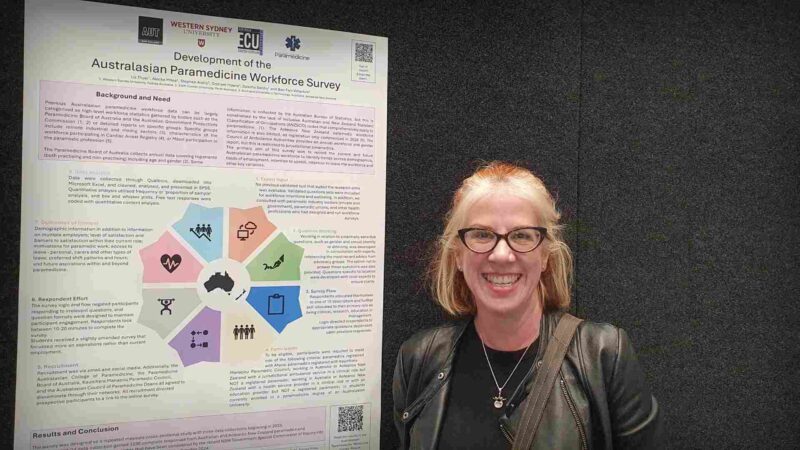
Paramedicine workforce across Australian & New Zealand
Liz Thyer is an Associate Professor in the Western Sydney University Paramedicine program and is passionate about innovations and excellence in health sciences teaching and learning.
She was an advanced life support paramedic with Ambulance Victoria for 11 years including roles as a clinical instructor and peer support officer. She has previously worked at Victoria University with the Paramedic programs and at Deakin University in Learning Futures.
-
Genetics and Environmental Factors of Glaucoma & Myopia
Professor David Mackey’s original research, over more than 30 years into the genetics of glaucoma and in the fields of optic atrophy and congenital cataract, has received constant professional accolades, attracted ongoing research funding and led to his publication of more than 400 peer-reviewed papers.
Post Views:
1,659
Dr Lisa Melton

Search Researchers / Research
Recent Profiled Researchers
- Paediatric haemorrhage and airway procedures
- Paramedicine workforce across Australian & New Zealand
- Trials in treating STIs, vaccines and lipid lowering medications
- Therapy to prevent hepatocellular carcinoma in people with liver cirrhosis
- Identification & characterisation of molecular drivers of therapeutic resistance
Categories
- Allied Health 1
- Alzheimer's 2
- Antenatal 1
- Antimicrobial Resistance 1
- Artificial Intelligence 1
- Association 1
- Bacteria 1
- Behavioural Science 1
- Biochemistry 1
- Biomarkers 1
- Biomaterials 2
- Blood Cancer 2
- Bone Health 3
- Bowel Cancer 3
- Brain 15
- Brain Cancer 1
- Breast Cancer 4
- Burden of Disease 2
- Cancer 19
- Cardiovascular 10
- CASE STUDY 9
- Clinical Trials 2
- Communicable Disease Control 1
- Dementia 10
- Dental 3
- Diabetes 4
- Digital Health / Biomarkers 2
- Ear, Nose, Throat ENT 7
- Emergency Medicine 5
- Europe 2
- Exercise 7
- Eyes 10
- Family Planning 3
- First Nations / Indigenous 1
- First Responders 1
- FUNDER PROFILE 1
- Gastrointestinal Tract 5
- General Practice 1
- Genetics 3
- Genomics 3
- Geriatric 1
- Government 2
- Health System Research 5
- Health Systems 1
- Health Workforce 4
- Hypertension 2
- Immunotherapy 4
- Indigenous 1
- Infection Prevention 2
- Infectious Disease 2
- Informatics 1
- Kidney 2
- Leukaemia 6
- LGBTQIA+ 1
- Liver 5
- Lung Cancer 7
- Lymphoma 2
- Materials science 2
- Medical Devices 7
- Medical Technology 2
- Medication 1
- Mental Health 8
- Metabolism 1
- Microbiology 3
- Microbiome 2
- Molecular biology 1
- Muscles 1
- Nanobiotechnology 6
- Neonatal 4
- North America 5
- Nutrition 5
- Obesity 1
- Oceania 141
- Oral Health 2
- Oral Medicine 3
- Ovarian Cancer 3
- Pain 1
- Pancreatic cancer 1
- Paramedicine 3
- Pathology 2
- Pediatric / Paediatric 11
- Pediatric Diseases 5
- Photonics/Laser 1
- Physiology 1
- Physiotherapy 1
- Podiatry 3
- Policy and/or position statement 5
- Population 4
- Population Health 1
- Precision Medicine 1
- Pregnancy and Child Birth 1
- Prostate Cancer 1
- Psychiatry 4
- Rare Genetic Disorders 4
- Regional, Rural and Remote 3
- Research 23
- RESEARCH CAREER PROFILE 1
- RESEARCH IMPACT 4
- RESEARCHER PROFILE 129
- Respiratory 3
- Sarcoma 1
- Sleep 3
- Spinal cord injury 2
- Stem Cells 4
- Stroke care 1
- Surgery 4
- Trauma 1
- Vaccines 3
- Worldwide 3