
 https://orcid.org/0000-0001-5840-943X
-
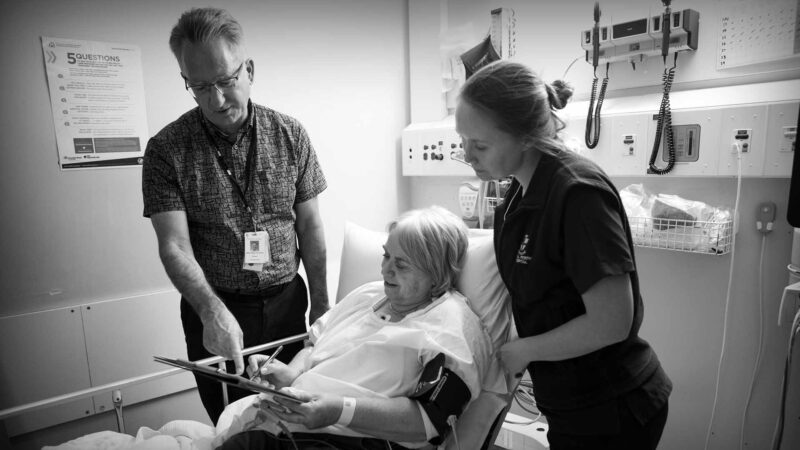
Clinical Research in Emergency Medicine
Professor Daniel Fatovich is a senior emergency physician and clinical researcher at Royal Perth Hospital Emergency Department (ED), with over 30 years’ experience in the design and conduct of clinical research in Emergency Medicine. He is also Head of the Centre for Clinical Research in Emergency Medicine (CCREM) within the Harry Perkins Institute of Medical Research.
-
Targeting chemotherapy resistance in ovarian cancer patients
Dr Alex Cole, from the Centenary Institute’s Centre for Biomedical AI, is now leading the research focused on developing a new treatment to counteract a protein called follistatin (FST), known for making ovarian cancer cells resistant to chemotherapy.
By employing cutting-edge molecular biology and directed evolution techniques, the project aims to create nanobodies—small, precise molecules—that can block FST. If successful, these nanobodies could enhance the effectiveness of chemotherapy and improve ovarian cancer treatment rates.
-
Podiatric Research In Children, the workforce and the LGBTQIA+ community
Professor Williams holds the role of Deputy Head of School, School of Primary and Allied Health Care, and course coordinator of the Doctor of Podiatric Medicine degree. She is a podiatrist, and has held professional roles in community health, acute and subacute services in child health care teams, research leadership and professional governance.
Post Views:
552
Identification & characterisation of molecular drivers of therapeutic resistance


Search Researchers / Research
Recent Profiled Researchers
Categories
- Allied Health 1
- Alzheimer's 2
- Antenatal 1
- Antimicrobial Resistance 1
- Artificial Intelligence 3
- Association 1
- Autism 2
- Bacteria 1
- Behavioural Science 1
- Biochemistry 1
- Biomarkers 2
- Biomaterials 2
- Blood Cancer 2
- Bone Health 3
- Bowel Cancer 3
- Brain 18
- Brain Cancer 1
- Breast Cancer 4
- Burden of Disease 2
- Cancer 20
- Cardiovascular 15
- CASE STUDY 10
- Clinical Trials 3
- Communicable Disease Control 1
- Dementia 12
- Dental 3
- Diabetes 4
- Digital Health / Biomarkers 2
- Ear, Nose, Throat ENT 7
- Emergency Medicine 6
- Europe 2
- Exercise 7
- Eyes 10
- Family Planning 3
- First Nations / Indigenous 2
- First Responders 1
- Frailty 1
- FUNDER PROFILE 1
- Gastrointestinal Tract 6
- General Practice 2
- Genetics 4
- Genomics 4
- Geriatric 1
- Government 2
- Health System Research 5
- Health Systems 1
- Health Workforce 4
- Hypertension 2
- Immunology 2
- Immunotherapy 7
- Indigenous 1
- Infection Prevention 2
- Infectious Disease 2
- Informatics 1
- Kidney 4
- Leukaemia 6
- LGBTQIA+ 1
- Liver 5
- Lung Cancer 8
- Lymphoma 2
- Materials science 2
- Maternal health 1
- Medical Devices 8
- Medical Technology 3
- Medication 4
- Mental Health 8
- Metabolism 1
- Microbiology 3
- Microbiome 3
- Molecular biology 1
- Muscles 1
- Nanobiotechnology 6
- Neonatal 4
- Neurogastroenterology 2
- Newborn / Neonatal 1
- North America 5
- Nuclear medicine / theranostics 1
- Nutrition 7
- Obesity 1
- Oceania 162
- Oral Health 2
- Oral Medicine 3
- Ovarian Cancer 3
- Pain 1
- Pancreatic cancer 1
- Paramedicine 3
- Pathology 2
- Pediatric / Paediatric 11
- Pediatric Diseases 5
- Photonics/Laser 1
- Physiology 1
- Physiotherapy 1
- Podiatry 3
- Policy and/or position statement 5
- Population 4
- Population – Seniors and Elderly 2
- Population Health 4
- Precision Medicine 1
- Pregnancy and Child Birth 2
- Preoperative 1
- Prostate Cancer 1
- Psychiatry 5
- Rare Genetic Disorders 5
- Regional, Rural and Remote 3
- Research 32
- RESEARCH CAREER PROFILE 1
- RESEARCH IMPACT 4
- RESEARCHER PROFILE 152
- Respiratory 3
- Sarcoma 1
- Sleep 3
- Spinal cord injury 2
- Stem Cells 4
- Stroke care 3
- Surgery 4
- Trauma 1
- Vaccines 4
- Vascular 1
- Worldwide 3