
 https://orcid.org/0000-0001-8463-645X
-
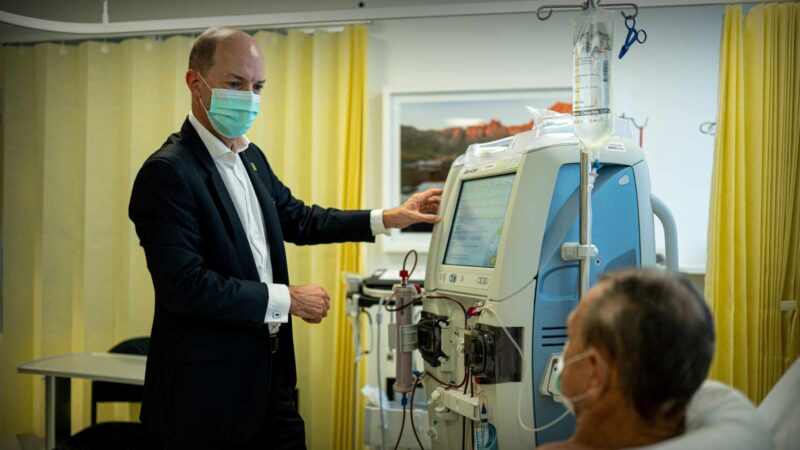
Renal care & data linkage of Tasmanian kidney disease cases
Professor Matthew Jose is a Renal Physician & Head of the Renal Unit at the Royal Hobart Hospital, and Professor of Medicine for the University of Tasmania.
Winner of the 2021 Rural Science Award from the Australia and New Zealand Society of Nephrology, he has worked in regional, rural and remote Australian locations for nearly 20 years as a Renal Physician, including the Northern Territory.
-
Novel forms of brain stimulation & psychedelic assisted psychotherapy
Professor Paul Fitzgerald is the Head of the School of Medicine and Psychology at the Australian National University. He is an academic psychiatrist with a MBBS degree, Masters of Psychological Medicine and research PhD. He has conducted an extensive range of experimental studies and clinical trials, focused on the development of novel treatment options for patients with mental health conditions such as depression, schizophrenia, obsessive compulsive disorder, PTSD, autism and Alzheimer’s disease.
-
Behavioural science in cancer screening, control and communication
Dr Dodd has an established international reputation as a behavioural scientist in cancer control and communication. Since completing her PhD in 2016, Dr Dodd has been awarded a three-year University of Sydney Postdoctoral Research Fellowship (2018-2021) and a three-year Research Fellowship at The Daffodil Centre (current). Dr Dodd is the co-chair of the ‘Strengthening and optimising approaches to cancer prevention, screening, and early detection’ hub at The Daffodil Centre (with more than 130 staff and students).
Post Views:
837
Nutraceutical and pharmacological intervention in neurological disorders


Search Researchers / Research
Recent Profiled Researchers
Categories
- Allied Health 1
- Alzheimer's 2
- Antenatal 1
- Antimicrobial Resistance 1
- Artificial Intelligence 3
- Association 1
- Autism 2
- Bacteria 1
- Behavioural Science 1
- Biochemistry 1
- Biomarkers 2
- Biomaterials 2
- Blood Cancer 2
- Bone Health 3
- Bowel Cancer 3
- Brain 18
- Brain Cancer 1
- Breast Cancer 4
- Burden of Disease 2
- Cancer 20
- Cardiovascular 15
- CASE STUDY 10
- Clinical Trials 3
- Communicable Disease Control 1
- Dementia 12
- Dental 3
- Diabetes 4
- Digital Health / Biomarkers 2
- Ear, Nose, Throat ENT 7
- Emergency Medicine 6
- Europe 2
- Exercise 7
- Eyes 10
- Family Planning 3
- First Nations / Indigenous 2
- First Responders 1
- Frailty 1
- FUNDER PROFILE 1
- Gastrointestinal Tract 6
- General Practice 2
- Genetics 4
- Genomics 4
- Geriatric 1
- Government 2
- Health System Research 5
- Health Systems 1
- Health Workforce 4
- Hypertension 2
- Immunology 2
- Immunotherapy 7
- Indigenous 1
- Infection Prevention 2
- Infectious Disease 2
- Informatics 1
- Kidney 4
- Leukaemia 6
- LGBTQIA+ 1
- Liver 5
- Lung Cancer 8
- Lymphoma 2
- Materials science 2
- Maternal health 1
- Medical Devices 8
- Medical Technology 3
- Medication 4
- Mental Health 8
- Metabolism 1
- Microbiology 3
- Microbiome 3
- Molecular biology 1
- Muscles 1
- Nanobiotechnology 6
- Neonatal 4
- Neurogastroenterology 2
- Newborn / Neonatal 1
- North America 5
- Nuclear medicine / theranostics 1
- Nutrition 7
- Obesity 1
- Oceania 162
- Oral Health 2
- Oral Medicine 3
- Ovarian Cancer 3
- Pain 1
- Pancreatic cancer 1
- Paramedicine 3
- Pathology 2
- Pediatric / Paediatric 11
- Pediatric Diseases 5
- Photonics/Laser 1
- Physiology 1
- Physiotherapy 1
- Podiatry 3
- Policy and/or position statement 5
- Population 4
- Population – Seniors and Elderly 2
- Population Health 4
- Precision Medicine 1
- Pregnancy and Child Birth 2
- Preoperative 1
- Prostate Cancer 1
- Psychiatry 5
- Rare Genetic Disorders 5
- Regional, Rural and Remote 3
- Research 32
- RESEARCH CAREER PROFILE 1
- RESEARCH IMPACT 4
- RESEARCHER PROFILE 152
- Respiratory 3
- Sarcoma 1
- Sleep 3
- Spinal cord injury 2
- Stem Cells 4
- Stroke care 3
- Surgery 4
- Trauma 1
- Vaccines 4
- Vascular 1
- Worldwide 3