
 https://orcid.org/0000-0002-3720-7588
-
Role of metabolic dysfunction in advanced prostate cancer
Dr Gunter was drawn to the area of prostate cancer research and the intersection between chronic metabolic disorders and their emerging relationship to cancer. Her strengths include expertise in the metabolic syndrome, insulin signalling and metabolism, and she has a demonstrated record of successful and productive research projects in metabolic research where she now applies her efforts to understanding the role of metabolic dysfunction in advanced prostate cancer.
-
Tyrosine Kinases in cancer recurrence
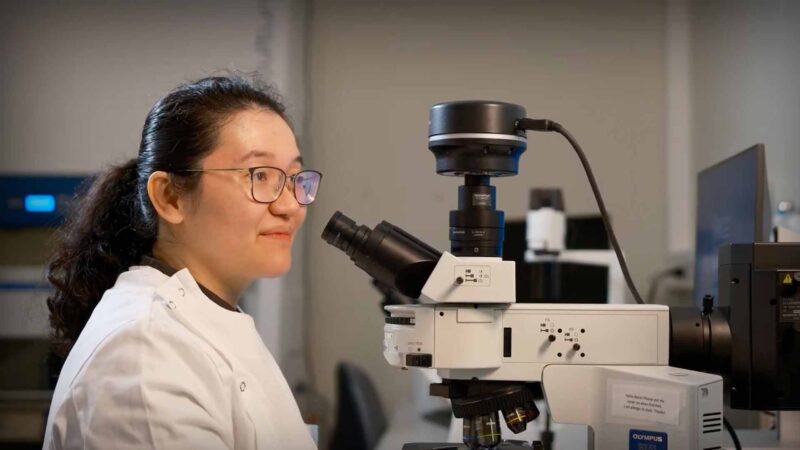
Dr Yu Yu leads the Oncology and Gynaecology Research Program at Curtin Medical Research Institute . Dr Yu is also a senior research fellow at Curtin Medical School.
Dr Yu Yu’s laboratory is working on better ways to treat cancers, particularly ovarian cancers which are resistant to conventional chemotherapy. The aims are for better informed treatment choice and reducing unnecessary exposure to ineffective chemotherapy and its potential adverse effects.
-
Mechanisms of resistance to menin inhibitor therapy and Acute Myeloid Leukaemia
Dr Rithin Nedumannil (MBBS, MPH, FRACP, FRCPA) is a PhD candidate at the University of Melbourne, undertaking his doctoral studies in collaboration with the Cambridge Stem Cell Institute (Cambridge, UK) and the Peter MacCallum Cancer Centre (Melbourne, Australia). He is a clinical haematologist and haematopathologist with current appointments at Peter MacCallum Cancer Centre, the Royal Melbourne Hospital, Austin Health and Northern Health.
Post Views:
344
Post stroke brain recovery targeting blood flow and vessel health


Search Researchers / Research
Recent Profiled Researchers
Categories
- Allied Health 1
- Alzheimer's 2
- Antenatal 1
- Antimicrobial Resistance 1
- Artificial Intelligence 3
- Association 1
- Autism 2
- Bacteria 1
- Behavioural Science 1
- Biochemistry 1
- Biomarkers 2
- Biomaterials 2
- Blood Cancer 2
- Bone Health 3
- Bowel Cancer 3
- Brain 18
- Brain Cancer 1
- Breast Cancer 4
- Burden of Disease 2
- Cancer 20
- Cardiovascular 15
- CASE STUDY 10
- Clinical Trials 3
- Communicable Disease Control 1
- Dementia 12
- Dental 3
- Diabetes 4
- Digital Health / Biomarkers 2
- Ear, Nose, Throat ENT 7
- Emergency Medicine 6
- Europe 2
- Exercise 7
- Eyes 10
- Family Planning 3
- First Nations / Indigenous 2
- First Responders 1
- Frailty 1
- FUNDER PROFILE 1
- Gastrointestinal Tract 6
- General Practice 2
- Genetics 4
- Genomics 4
- Geriatric 1
- Government 2
- Health System Research 5
- Health Systems 1
- Health Workforce 4
- Hypertension 2
- Immunology 2
- Immunotherapy 7
- Indigenous 1
- Infection Prevention 2
- Infectious Disease 2
- Informatics 1
- Kidney 4
- Leukaemia 6
- LGBTQIA+ 1
- Liver 5
- Lung Cancer 8
- Lymphoma 2
- Materials science 2
- Maternal health 1
- Medical Devices 8
- Medical Technology 3
- Medication 4
- Mental Health 8
- Metabolism 1
- Microbiology 3
- Microbiome 3
- Molecular biology 1
- Muscles 1
- Nanobiotechnology 6
- Neonatal 4
- Neurogastroenterology 2
- Newborn / Neonatal 1
- North America 5
- Nuclear medicine / theranostics 1
- Nutrition 7
- Obesity 1
- Oceania 162
- Oral Health 2
- Oral Medicine 3
- Ovarian Cancer 3
- Pain 1
- Pancreatic cancer 1
- Paramedicine 3
- Pathology 2
- Pediatric / Paediatric 11
- Pediatric Diseases 5
- Photonics/Laser 1
- Physiology 1
- Physiotherapy 1
- Podiatry 3
- Policy and/or position statement 5
- Population 4
- Population – Seniors and Elderly 2
- Population Health 4
- Precision Medicine 1
- Pregnancy and Child Birth 2
- Preoperative 1
- Prostate Cancer 1
- Psychiatry 5
- Rare Genetic Disorders 5
- Regional, Rural and Remote 3
- Research 32
- RESEARCH CAREER PROFILE 1
- RESEARCH IMPACT 4
- RESEARCHER PROFILE 152
- Respiratory 3
- Sarcoma 1
- Sleep 3
- Spinal cord injury 2
- Stem Cells 4
- Stroke care 3
- Surgery 4
- Trauma 1
- Vaccines 4
- Vascular 1
- Worldwide 3