
-
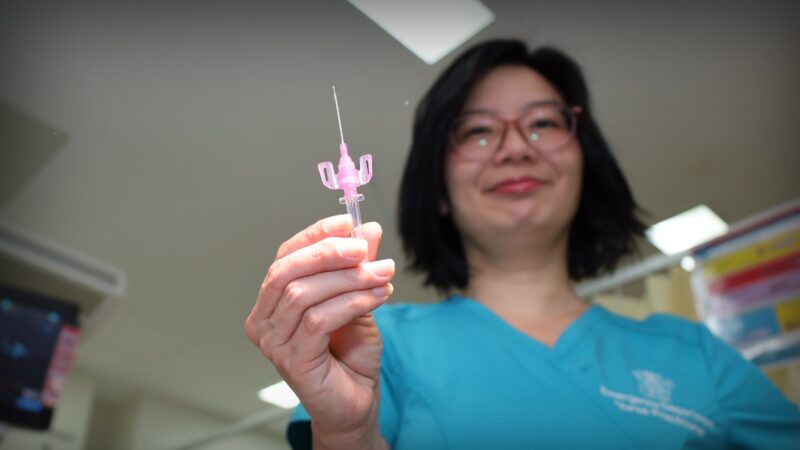
Peripheral intravenous catheter management
Dr Grace Xu is a clinician-researcher, senior nurse practitioner, and emerging implementation scientist with more than 16 years of emergency nursing experience. She is a Fellow of the College of Emergency Nurses Australasia and a Centaur Fellow. She also leads the Early Career Researcher/Clinician Researcher portfolio within the Alliance for Vascular Access Teaching and Research group.
-
Professor Alex Fornito
PROFESSOR ALEX FORNITO
HEAD OF THE BRAIN MAPPING AND MODELLING RESEARCH PROGRAM
TURNER INSTITUTE FOR BRAIN AND MENTAL HEALTH, MONASH UNIVERSITY
VICTORIA, AUSTRALIA -
Respiratory health and the microbiome in the lung environment
Dr Taylor leads the Respiratory Health Group within the Microbiome and Host Health Program. His research employs tailored techniques that allow the lung environment to be characterised to a high level of accuracy, including detailed measurements of airway microbiology (microbiome), mucus composition, and inflammation. This information is used to identify predictive markers of chronic lung disease severity as well as determine effective forms of therapy.
Post Views:
241
RESEARCH IMPACT: 32 years of understanding, diagnosing, treating & preventing the onset of heart disease


Search Researchers / Research
Recent Profiled Researchers
- Physiotherapist-led care for musculoskeletal conditions in the emergency department
- 3D printing, bioprinting & stem cell tech in articular cartilage regeneration and treating osteosarcoma
- Drug delivery of targeted therapies for pancreatic cancer, motor neurone disease
- RESEARCH IMPACT: 32 years of understanding, diagnosing, treating & preventing the onset of heart disease
- Large-scale clinical and population-based research
Categories
- Allied Health 1
- Alzheimer's 2
- Antenatal 1
- Antimicrobial Resistance 1
- Artificial Intelligence 4
- Association 1
- Autism 2
- Bacteria 1
- Behavioural Science 1
- Biochemistry 1
- Biofabrication and additive manufacturing 1
- Biomarkers 2
- Biomaterials 2
- Blood Cancer 2
- Bone Health 4
- Bowel Cancer 3
- Brain 18
- Brain Cancer 1
- Breast Cancer 4
- Burden of Disease 2
- Cancer 20
- Cardiovascular 16
- CASE STUDY 10
- Clinical Trials 3
- Communicable Disease Control 1
- Dementia 12
- Dental 3
- Diabetes 4
- Digital Health / Biomarkers 2
- Drug delivery 1
- Ear, Nose, Throat ENT 7
- Emergency Medicine 7
- Europe 2
- Exercise 7
- Eyes 10
- Family Planning 3
- First Nations / Indigenous 2
- First Responders 1
- Frailty 1
- FUNDER PROFILE 1
- Gastrointestinal Tract 6
- General Practice 2
- Genetics 4
- Genomics 4
- Geriatric 1
- Government 2
- Health System Research 6
- Health Systems 1
- Health Workforce 5
- Hypertension 2
- Immunology 2
- Immunotherapy 7
- Indigenous 1
- Infection Prevention 2
- Infectious Disease 2
- Informatics 1
- Kidney 4
- Leukaemia 6
- LGBTQIA+ 1
- Liver 5
- Lung Cancer 8
- Lymphoma 2
- Materials science 2
- Maternal health 1
- Medical Devices 8
- Medical implants 1
- Medical Technology 3
- Medication 4
- Mental Health 8
- Metabolism 1
- Microbiology 3
- Microbiome 3
- Molecular biology 1
- Motor neurone disease 1
- Muscles 1
- Nanobiotechnology 6
- Neonatal 4
- Neurogastroenterology 2
- Newborn / Neonatal 1
- North America 5
- Nuclear medicine / theranostics 1
- Nutrition 7
- Obesity 1
- Oceania 166
- Oral Health 2
- Oral Medicine 3
- Ovarian Cancer 3
- Pain 1
- Pancreatic cancer 2
- Paramedicine 3
- Pathology 2
- Pediatric / Paediatric 11
- Pediatric Diseases 5
- Photonics/Laser 1
- Physiology 1
- Physiotherapy 2
- Podiatry 3
- Policy and/or position statement 5
- Population 4
- Population – Seniors and Elderly 2
- Population Health 4
- Precision Medicine 1
- Pregnancy and Child Birth 2
- Preoperative 1
- Prostate Cancer 1
- Psychiatry 5
- Rare Genetic Disorders 5
- Regional, Rural and Remote 3
- Research 32
- RESEARCH CAREER PROFILE 1
- RESEARCH IMPACT 5
- RESEARCHER PROFILE 155
- Respiratory 3
- Sarcoma 1
- Sleep 3
- Spinal cord injury 2
- Stem Cells 4
- Stroke care 4
- Surgery 5
- Trauma 1
- Vaccines 4
- Vascular 1
- Worldwide 3