
-
Health impacts of donor milk for pre-term babies
Professor Alice Rumbold is Theme Leader of SAHMRI Women and Kids, managing a multidisciplinary research team focussed on improving health outcomes for women, babies and families. She also holds an affiliate position as a Research Leader within the Robinson Research Institute at the University of Adelaide.
An epidemiologist and health services researcher, she is internationally renowned for her leadership of large-scale clinical trials, epidemiological studies and systematic review activities to improve perinatal and reproductive health care. She is passionate about improving health outcomes for women and babies, particularly those experiencing vulnerability. Her current research interests include preterm birth, breastfeeding, human milk banking and infertility
-
Medication management and quality use of medicines
Adjunct Professor Manya Angley is an Advanced Practice Pharmacist. Manya spent the first 20 years of her career as a teaching and research academic at the University of South Australia. She currently works as a credentialed pharmacist and researcher through her business, Manya Angley Research and Consulting (MARAC).
-
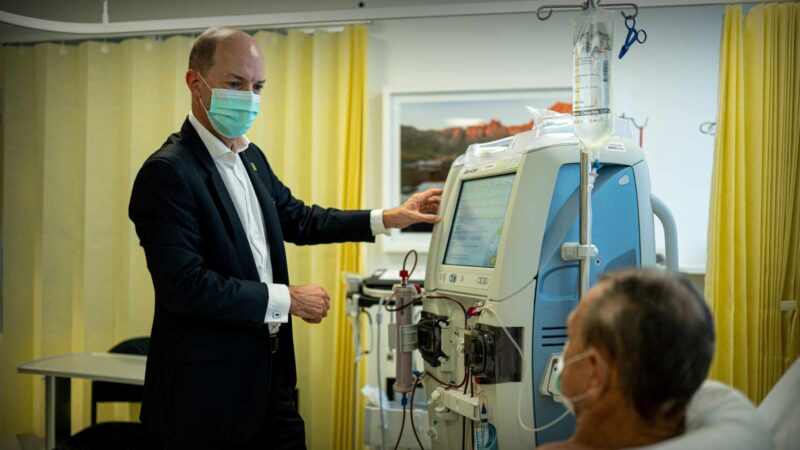
Renal care & data linkage of Tasmanian kidney disease cases
Professor Matthew Jose is a Renal Physician & Head of the Renal Unit at the Royal Hobart Hospital, and Professor of Medicine for the University of Tasmania.
Winner of the 2021 Rural Science Award from the Australia and New Zealand Society of Nephrology, he has worked in regional, rural and remote Australian locations for nearly 20 years as a Renal Physician, including the Northern Territory.
Post Views:
453
Applying artificial intelligence to medical imaging for cardiovascular disease detection


Search Researchers / Research
Recent Profiled Researchers
Categories
- Allied Health 1
- Alzheimer's 2
- Antenatal 1
- Antimicrobial Resistance 1
- Artificial Intelligence 3
- Association 1
- Autism 2
- Bacteria 1
- Behavioural Science 1
- Biochemistry 1
- Biomarkers 2
- Biomaterials 2
- Blood Cancer 2
- Bone Health 3
- Bowel Cancer 3
- Brain 18
- Brain Cancer 1
- Breast Cancer 4
- Burden of Disease 2
- Cancer 20
- Cardiovascular 15
- CASE STUDY 10
- Clinical Trials 3
- Communicable Disease Control 1
- Dementia 12
- Dental 3
- Diabetes 4
- Digital Health / Biomarkers 2
- Ear, Nose, Throat ENT 7
- Emergency Medicine 6
- Europe 2
- Exercise 7
- Eyes 10
- Family Planning 3
- First Nations / Indigenous 2
- First Responders 1
- Frailty 1
- FUNDER PROFILE 1
- Gastrointestinal Tract 6
- General Practice 2
- Genetics 4
- Genomics 4
- Geriatric 1
- Government 2
- Health System Research 5
- Health Systems 1
- Health Workforce 4
- Hypertension 2
- Immunology 2
- Immunotherapy 7
- Indigenous 1
- Infection Prevention 2
- Infectious Disease 2
- Informatics 1
- Kidney 4
- Leukaemia 6
- LGBTQIA+ 1
- Liver 5
- Lung Cancer 8
- Lymphoma 2
- Materials science 2
- Maternal health 1
- Medical Devices 8
- Medical Technology 3
- Medication 4
- Mental Health 8
- Metabolism 1
- Microbiology 3
- Microbiome 3
- Molecular biology 1
- Muscles 1
- Nanobiotechnology 6
- Neonatal 4
- Neurogastroenterology 2
- Newborn / Neonatal 1
- North America 5
- Nuclear medicine / theranostics 1
- Nutrition 7
- Obesity 1
- Oceania 162
- Oral Health 2
- Oral Medicine 3
- Ovarian Cancer 3
- Pain 1
- Pancreatic cancer 1
- Paramedicine 3
- Pathology 2
- Pediatric / Paediatric 11
- Pediatric Diseases 5
- Photonics/Laser 1
- Physiology 1
- Physiotherapy 1
- Podiatry 3
- Policy and/or position statement 5
- Population 4
- Population – Seniors and Elderly 2
- Population Health 4
- Precision Medicine 1
- Pregnancy and Child Birth 2
- Preoperative 1
- Prostate Cancer 1
- Psychiatry 5
- Rare Genetic Disorders 5
- Regional, Rural and Remote 3
- Research 32
- RESEARCH CAREER PROFILE 1
- RESEARCH IMPACT 4
- RESEARCHER PROFILE 152
- Respiratory 3
- Sarcoma 1
- Sleep 3
- Spinal cord injury 2
- Stem Cells 4
- Stroke care 3
- Surgery 4
- Trauma 1
- Vaccines 4
- Vascular 1
- Worldwide 3