
 https://orcid.org/0000-0001-9173-3944
-
CASE STUDY Next Generation Condom Contraception
Eudaemon Technologies, an early-stage medtech company with a focus on sexual reproductive health, is developing a hydrogel condom to address the need for a better feeling, next generation condom, with the potential to improve user experience and address issues with traditional latex condoms.
“Over 1 million STI’s being diagnosed every day and up to 120 million unplanned pregnancies every year result in a $60 billion health burden across the globe”, says Co-Founder and Executive Director of Operations, Dr Simon Cook.
Formed in 2018, the company focuses on developing tough hydrogels as an alternative to address issues with odour, colour, and taste commonly associated with latex condoms. This technology can be loaded with small molecule drugs for flavours or anti-STI compounds, and was developed in response to a grant from the Bill and Melinda Gates Foundation to address unplanned pregnancies and STIs.
-
Big data to improve the use of antidepressant medicines in aged care
Georgina Hughes is a pharmacist & PhD Candidate with the University of South Australia Clinical and Health Sciences and the Registry of Senior Australians (ROSA), undertaking research at South Australian Health and Medical Research Institute (SAHMRI).
Georgina’s PhD study and first published paper was on how to improve the safe and effective use of antidepressant medicines and optimise quality use of medicines in older people accessing residential aged care.
-
Drug delivery of targeted therapies for pancreatic cancer, motor neurone disease
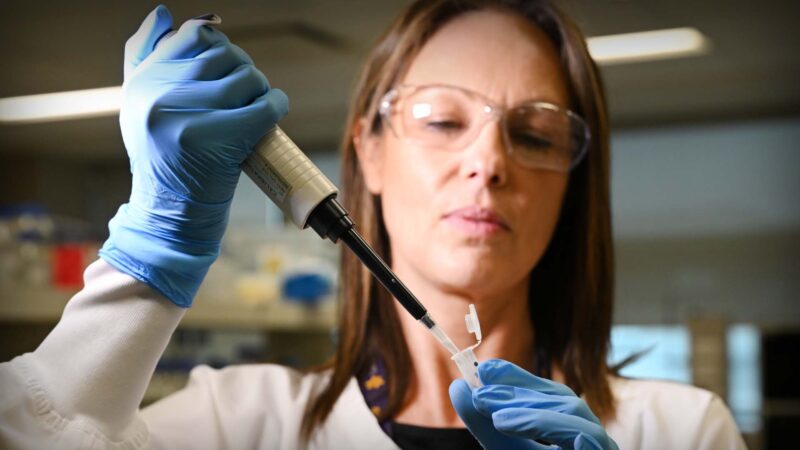
Associate Professor Kara Vine-Perrow is a cancer researcher, educator and research leader in the Faculty of Science, Medicine & Health at the University of Wollongong, where she serves as Deputy Director (Community Partnership and Impact) of the Molecular Horizons Research Institute and leads the Targeted Cancer Therapeutics Laboratory. Her research focuses on developing innovative drug delivery technologies, implantable medical devices and RNA-based therapeutics for difficult-to-treat diseases, with a particular emphasis on pancreatic cancer and motor neurone disease.
Post Views:
284
Large-scale clinical and population-based research


Search Researchers / Research
Recent Profiled Researchers
- Physiotherapist-led care for musculoskeletal conditions in the emergency department
- 3D printing, bioprinting & stem cell tech in articular cartilage regeneration and treating osteosarcoma
- Drug delivery of targeted therapies for pancreatic cancer, motor neurone disease
- RESEARCH IMPACT: 32 years of understanding, diagnosing, treating & preventing the onset of heart disease
- Large-scale clinical and population-based research
Categories
- Allied Health 1
- Alzheimer's 2
- Antenatal 1
- Antimicrobial Resistance 1
- Artificial Intelligence 4
- Association 1
- Autism 2
- Bacteria 1
- Behavioural Science 1
- Biochemistry 1
- Biofabrication and additive manufacturing 1
- Biomarkers 2
- Biomaterials 2
- Blood Cancer 2
- Bone Health 4
- Bowel Cancer 3
- Brain 18
- Brain Cancer 1
- Breast Cancer 4
- Burden of Disease 2
- Cancer 20
- Cardiovascular 16
- CASE STUDY 10
- Clinical Trials 3
- Communicable Disease Control 1
- Dementia 12
- Dental 3
- Diabetes 4
- Digital Health / Biomarkers 2
- Drug delivery 1
- Ear, Nose, Throat ENT 7
- Emergency Medicine 7
- Europe 2
- Exercise 7
- Eyes 10
- Family Planning 3
- First Nations / Indigenous 2
- First Responders 1
- Frailty 1
- FUNDER PROFILE 1
- Gastrointestinal Tract 6
- General Practice 2
- Genetics 4
- Genomics 4
- Geriatric 1
- Government 2
- Health System Research 6
- Health Systems 1
- Health Workforce 5
- Hypertension 2
- Immunology 2
- Immunotherapy 7
- Indigenous 1
- Infection Prevention 2
- Infectious Disease 2
- Informatics 1
- Kidney 4
- Leukaemia 6
- LGBTQIA+ 1
- Liver 5
- Lung Cancer 8
- Lymphoma 2
- Materials science 2
- Maternal health 1
- Medical Devices 8
- Medical implants 1
- Medical Technology 3
- Medication 4
- Mental Health 8
- Metabolism 1
- Microbiology 3
- Microbiome 3
- Molecular biology 1
- Motor neurone disease 1
- Muscles 1
- Nanobiotechnology 6
- Neonatal 4
- Neurogastroenterology 2
- Newborn / Neonatal 1
- North America 5
- Nuclear medicine / theranostics 1
- Nutrition 7
- Obesity 1
- Oceania 166
- Oral Health 2
- Oral Medicine 3
- Ovarian Cancer 3
- Pain 1
- Pancreatic cancer 2
- Paramedicine 3
- Pathology 2
- Pediatric / Paediatric 11
- Pediatric Diseases 5
- Photonics/Laser 1
- Physiology 1
- Physiotherapy 2
- Podiatry 3
- Policy and/or position statement 5
- Population 4
- Population – Seniors and Elderly 2
- Population Health 4
- Precision Medicine 1
- Pregnancy and Child Birth 2
- Preoperative 1
- Prostate Cancer 1
- Psychiatry 5
- Rare Genetic Disorders 5
- Regional, Rural and Remote 3
- Research 32
- RESEARCH CAREER PROFILE 1
- RESEARCH IMPACT 5
- RESEARCHER PROFILE 155
- Respiratory 3
- Sarcoma 1
- Sleep 3
- Spinal cord injury 2
- Stem Cells 4
- Stroke care 4
- Surgery 5
- Trauma 1
- Vaccines 4
- Vascular 1
- Worldwide 3