
 https://orcid.org/0000-0003-2527-5417
-
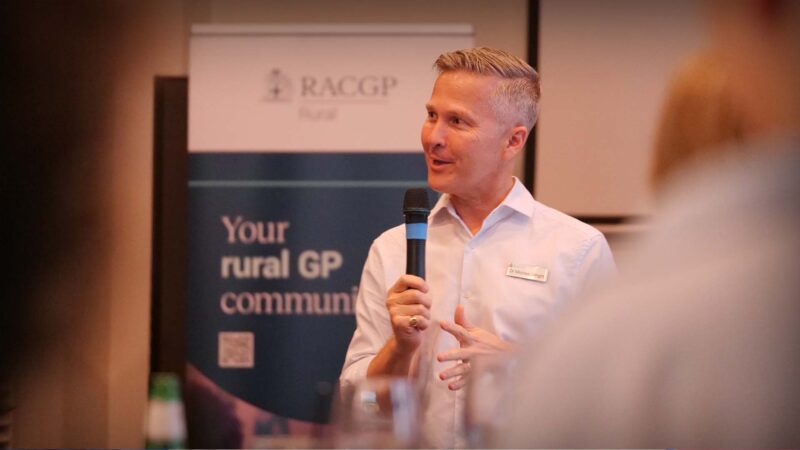
New models of care and value in General Practice
Dr Michael Wright is a GP, health economist and health services researcher. Dr Wright currently works as a portfolio GP, combining clinical practice with strategic appointments (most recently with RACGP, Central and Eastern Sydney Primary Health Network, Avant Mutual the Australian Institute of Health and Welfare) and academic research analysing the effects of current health policy on the quality and performance of primary care.
-
Next generation nanomedicine and radiopharmaceuticals to treat cancer
Finding better ways of treating cancer, aside from finding a cure, aim to provide a better quality of life for those who suffer from it.
Professor Thurecht’s work focuses on nanomedicine and spans across the Australian Institute for Bioengineering and Nanotechnology and the Centre for Advanced Imaging, at the University of Queensland in Australia.
-
Good and bad extracellular vesicles in health and disease
Associate Professor Joy Wolfram has joint appointments in the School of Chemical Engineering and the Australian Institute for Bioengineering and Nanotechnology at The University of Queensland, and through her work at the AIBN, she aims to develop a new paradigm of therapeutics (using nanotechnology and cell products) to treat life-threatening diseases that are major causes of death globally, including cardiovascular disease, kidney disease, and breast cancer.
Post Views:
117
Liver cancer & patient-derived tumour organoids


Search Researchers / Research
Recent Profiled Researchers
- Paramedicine workforce across Australian & New Zealand
- Trials in treating STIs, vaccines and lipid lowering medications
- Therapy to prevent hepatocellular carcinoma in people with liver cirrhosis
- Identification & characterisation of molecular drivers of therapeutic resistance
- Liver cancer & patient-derived tumour organoids
Categories
- Allied Health 1
- Alzheimer's 2
- Antenatal 1
- Antimicrobial Resistance 1
- Artificial Intelligence 1
- Association 1
- Bacteria 1
- Behavioural Science 1
- Biochemistry 1
- Biomarkers 1
- Biomaterials 2
- Blood Cancer 2
- Bone Health 3
- Bowel Cancer 3
- Brain 15
- Brain Cancer 1
- Breast Cancer 4
- Burden of Disease 2
- Cancer 19
- Cardiovascular 10
- CASE STUDY 9
- Clinical Trials 2
- Communicable Disease Control 1
- Dementia 10
- Dental 3
- Diabetes 4
- Digital Health / Biomarkers 2
- Ear, Nose, Throat ENT 7
- Emergency Medicine 4
- Europe 2
- Exercise 7
- Eyes 10
- Family Planning 3
- First Nations / Indigenous 1
- First Responders 1
- FUNDER PROFILE 1
- Gastrointestinal Tract 5
- General Practice 1
- Genetics 3
- Genomics 3
- Geriatric 1
- Government 2
- Health System Research 5
- Health Systems 1
- Health Workforce 4
- Hypertension 2
- Immunotherapy 4
- Indigenous 1
- Infection Prevention 2
- Infectious Disease 2
- Informatics 1
- Kidney 2
- Leukaemia 6
- LGBTQIA+ 1
- Liver 5
- Lung Cancer 7
- Lymphoma 2
- Materials science 2
- Medical Devices 7
- Medical Technology 2
- Medication 1
- Mental Health 8
- Metabolism 1
- Microbiology 3
- Microbiome 2
- Molecular biology 1
- Muscles 1
- Nanobiotechnology 6
- Neonatal 4
- North America 5
- Nutrition 5
- Obesity 1
- Oceania 140
- Oral Health 2
- Oral Medicine 3
- Ovarian Cancer 3
- Pain 1
- Pancreatic cancer 1
- Paramedicine 3
- Pathology 2
- Pediatric / Paediatric 10
- Pediatric Diseases 5
- Photonics/Laser 1
- Physiology 1
- Physiotherapy 1
- Podiatry 3
- Policy and/or position statement 5
- Population 4
- Population Health 1
- Precision Medicine 1
- Pregnancy and Child Birth 1
- Prostate Cancer 1
- Psychiatry 4
- Rare Genetic Disorders 4
- Regional, Rural and Remote 3
- Research 22
- RESEARCH CAREER PROFILE 1
- RESEARCH IMPACT 4
- RESEARCHER PROFILE 128
- Respiratory 3
- Sarcoma 1
- Sleep 3
- Spinal cord injury 2
- Stem Cells 4
- Stroke care 1
- Surgery 4
- Trauma 1
- Vaccines 3
- Worldwide 3