
-
CASE STUDY Next Generation Condom Contraception
Eudaemon Technologies, an early-stage medtech company with a focus on sexual reproductive health, is developing a hydrogel condom to address the need for a better feeling, next generation condom, with the potential to improve user experience and address issues with traditional latex condoms.
“Over 1 million STI’s being diagnosed every day and up to 120 million unplanned pregnancies every year result in a $60 billion health burden across the globe”, says Co-Founder and Executive Director of Operations, Dr Simon Cook.
Formed in 2018, the company focuses on developing tough hydrogels as an alternative to address issues with odour, colour, and taste commonly associated with latex condoms. This technology can be loaded with small molecule drugs for flavours or anti-STI compounds, and was developed in response to a grant from the Bill and Melinda Gates Foundation to address unplanned pregnancies and STIs.
-
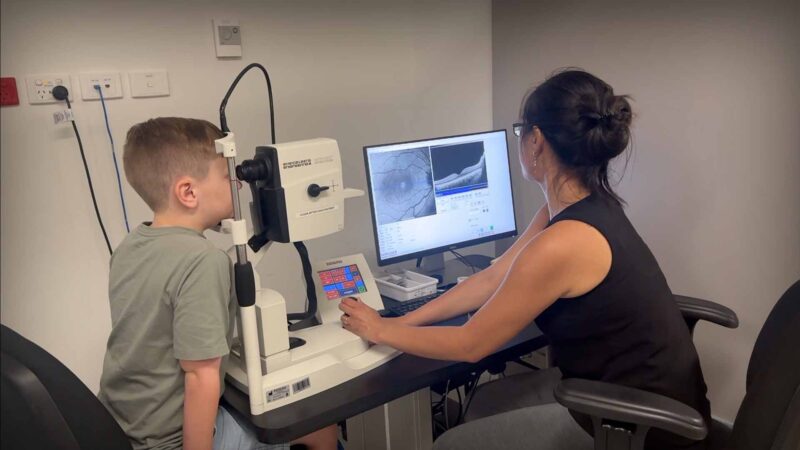
Genetics of the choroid and impact on eye health
Dr Samantha Lee is a Senior Research Fellow at Lions Eye Institute and the University of Western Australia. Dr Lee obtained her PhD in 2017 and the Queensland University of Technology and has since been working on the genetics and environmental causes of various eye diseases, with a focus on glaucoma and myopia. She has published 57 full-length scientific papers and her work has been cited over 1,000 times. She serves on the Editorial Board for the journal BMC Ophthalmology and Scientific Reports, and on the Research Advisory Committee for the Ophthalmic Research Institute of Australia.
-
Forensic psychiatry research in the setting of the justice system
Prof Kimberlie Dean is Head of the Discipline of Psychiatry and Mental Health at UNSW. She was appointed to the inaugural Chair in Forensic Mental Health at UNSW in 2011, a joint appointment with Justice Health NSW. She also holds a Clinical Academic appointment as a Consultant Forensic Psychiatrist with Justice Health NSW. She is Academic Program Director for the Masters Forensic Mental Health at UNSW.
Post Views:
2,777
Personalised approaches to lung therapy


Search Researchers / Research
Recent Profiled Researchers
- Therapy to prevent hepatocellular carcinoma in people with liver cirrhosis
- Identification & characterisation of molecular drivers of therapeutic resistance
- Liver cancer & patient-derived tumour organoids
- Developing upper limb motor biomarkers of dementia
- Metabolic phenotyping, lipidomics & bioinformatics in dementia
Categories
- Allied Health 1
- Alzheimer's 2
- Antenatal 1
- Antimicrobial Resistance 1
- Artificial Intelligence 1
- Association 1
- Bacteria 1
- Behavioural Science 1
- Biochemistry 1
- Biomarkers 1
- Biomaterials 2
- Blood Cancer 2
- Bone Health 3
- Bowel Cancer 3
- Brain 15
- Brain Cancer 1
- Breast Cancer 4
- Burden of Disease 2
- Cancer 19
- Cardiovascular 10
- CASE STUDY 9
- Clinical Trials 1
- Communicable Disease Control 1
- Dementia 10
- Dental 3
- Diabetes 4
- Digital Health / Biomarkers 2
- Ear, Nose, Throat ENT 7
- Emergency Medicine 4
- Europe 2
- Exercise 7
- Eyes 10
- Family Planning 3
- First Nations / Indigenous 1
- First Responders 1
- FUNDER PROFILE 1
- Gastrointestinal Tract 5
- General Practice 1
- Genetics 3
- Genomics 3
- Geriatric 1
- Government 2
- Health System Research 5
- Health Systems 1
- Health Workforce 3
- Hypertension 2
- Immunotherapy 4
- Indigenous 1
- Infection Prevention 2
- Infectious Disease 2
- Informatics 1
- Kidney 2
- Leukaemia 6
- LGBTQIA+ 1
- Liver 5
- Lung Cancer 7
- Lymphoma 2
- Materials science 2
- Medical Devices 7
- Medical Technology 2
- Medication 1
- Mental Health 8
- Metabolism 1
- Microbiology 3
- Microbiome 2
- Molecular biology 1
- Muscles 1
- Nanobiotechnology 6
- Neonatal 4
- North America 5
- Nutrition 5
- Obesity 1
- Oceania 138
- Oral Health 2
- Oral Medicine 3
- Ovarian Cancer 3
- Pain 1
- Pancreatic cancer 1
- Paramedicine 2
- Pathology 2
- Pediatric / Paediatric 10
- Pediatric Diseases 5
- Photonics/Laser 1
- Physiology 1
- Physiotherapy 1
- Podiatry 3
- Policy and/or position statement 5
- Population 4
- Population Health 1
- Precision Medicine 1
- Pregnancy and Child Birth 1
- Prostate Cancer 1
- Psychiatry 4
- Rare Genetic Disorders 4
- Regional, Rural and Remote 3
- Research 20
- RESEARCH CAREER PROFILE 1
- RESEARCH IMPACT 4
- RESEARCHER PROFILE 126
- Respiratory 3
- Sarcoma 1
- Sleep 3
- Spinal cord injury 2
- Stem Cells 4
- Stroke care 1
- Surgery 4
- Trauma 1
- Vaccines 3
- Worldwide 3