
-
Better biomarkers for predicting the incidence of having atherosclerosis and heart attack
Assoc Prof Bursill is a vascular biologist with interests and expertise in vascular inflammation, atherosclerosis and angiogenesis. She completed her PhD at The University of Adelaide in lipid metabolism then headed to Oxford University for five years to undergo a postdoctoral post in the Departments of Cardiovascular Medicine and Pathology. Her postdoctoral time triggered her interest in the mechanisms that cause atherosclerosis and in particular the role of small inflammatory proteins called chemokines.
-
Optimising Rural Musculoskeletal Health
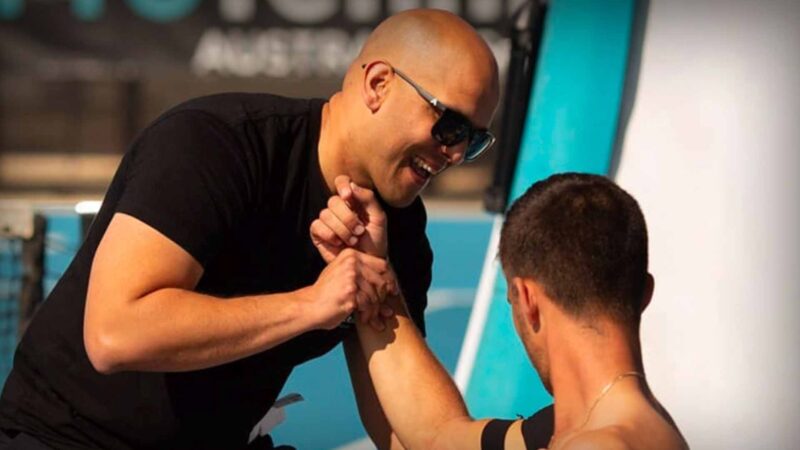
Adnan Asger Ali is a Director of Accelerate Physiotherapy and PhD candidate at The University of Sydney, where he is researching implementation strategies for musculoskeletal care pathways in rural Australia as part of the PACE-RURAL project.
A passionate advocate for physiotherapy, Adnan serves as Chair of the Australian Physiotherapy Association’s National Musculoskeletal Committee and sits on the Capital Health Network’s Clinical Council. His commitment to clinical excellence was recognised when he received Physiotherapist of the Year at the 2023 Allied Health Awards.
-
Next Generation Condom Contraception, Dr Simon Cook
Dr. Simon Cook, Co-Founder and Executive Director of Operations at Eudaemon Technologies, has had a diverse and impactful career journey. Beginning with a background in biotechnology from the University of Wollongong, his focus on bacterial pathogenesis during his PhD led him to study Group A Strep and the streptokinase protein.
Subsequently, Dr. Cook ventured into a unique project funded by the Bill and Melinda Gates Foundation, where he became involved in the development of a next-generation condom to address existing issues such as feel, odour, and taste.
Post Views:
2,636
Paramedics in the Community


Search Researchers / Research
Recent Profiled Researchers
- Paediatric haemorrhage and airway procedures
- Paramedicine workforce across Australian & New Zealand
- Trials in treating STIs, vaccines and lipid lowering medications
- Therapy to prevent hepatocellular carcinoma in people with liver cirrhosis
- Identification & characterisation of molecular drivers of therapeutic resistance
Categories
- Allied Health 1
- Alzheimer's 2
- Antenatal 1
- Antimicrobial Resistance 1
- Artificial Intelligence 1
- Association 1
- Bacteria 1
- Behavioural Science 1
- Biochemistry 1
- Biomarkers 1
- Biomaterials 2
- Blood Cancer 2
- Bone Health 3
- Bowel Cancer 3
- Brain 15
- Brain Cancer 1
- Breast Cancer 4
- Burden of Disease 2
- Cancer 19
- Cardiovascular 10
- CASE STUDY 9
- Clinical Trials 2
- Communicable Disease Control 1
- Dementia 10
- Dental 3
- Diabetes 4
- Digital Health / Biomarkers 2
- Ear, Nose, Throat ENT 7
- Emergency Medicine 5
- Europe 2
- Exercise 7
- Eyes 10
- Family Planning 3
- First Nations / Indigenous 1
- First Responders 1
- FUNDER PROFILE 1
- Gastrointestinal Tract 5
- General Practice 1
- Genetics 3
- Genomics 3
- Geriatric 1
- Government 2
- Health System Research 5
- Health Systems 1
- Health Workforce 4
- Hypertension 2
- Immunotherapy 4
- Indigenous 1
- Infection Prevention 2
- Infectious Disease 2
- Informatics 1
- Kidney 2
- Leukaemia 6
- LGBTQIA+ 1
- Liver 5
- Lung Cancer 7
- Lymphoma 2
- Materials science 2
- Medical Devices 7
- Medical Technology 2
- Medication 1
- Mental Health 8
- Metabolism 1
- Microbiology 3
- Microbiome 2
- Molecular biology 1
- Muscles 1
- Nanobiotechnology 6
- Neonatal 4
- North America 5
- Nutrition 5
- Obesity 1
- Oceania 141
- Oral Health 2
- Oral Medicine 3
- Ovarian Cancer 3
- Pain 1
- Pancreatic cancer 1
- Paramedicine 3
- Pathology 2
- Pediatric / Paediatric 11
- Pediatric Diseases 5
- Photonics/Laser 1
- Physiology 1
- Physiotherapy 1
- Podiatry 3
- Policy and/or position statement 5
- Population 4
- Population Health 1
- Precision Medicine 1
- Pregnancy and Child Birth 1
- Prostate Cancer 1
- Psychiatry 4
- Rare Genetic Disorders 4
- Regional, Rural and Remote 3
- Research 23
- RESEARCH CAREER PROFILE 1
- RESEARCH IMPACT 4
- RESEARCHER PROFILE 129
- Respiratory 3
- Sarcoma 1
- Sleep 3
- Spinal cord injury 2
- Stem Cells 4
- Stroke care 1
- Surgery 4
- Trauma 1
- Vaccines 3
- Worldwide 3